131stIndia's rank on the Global Gender Gap Index 2025 6
🌎
#ClearHerPath
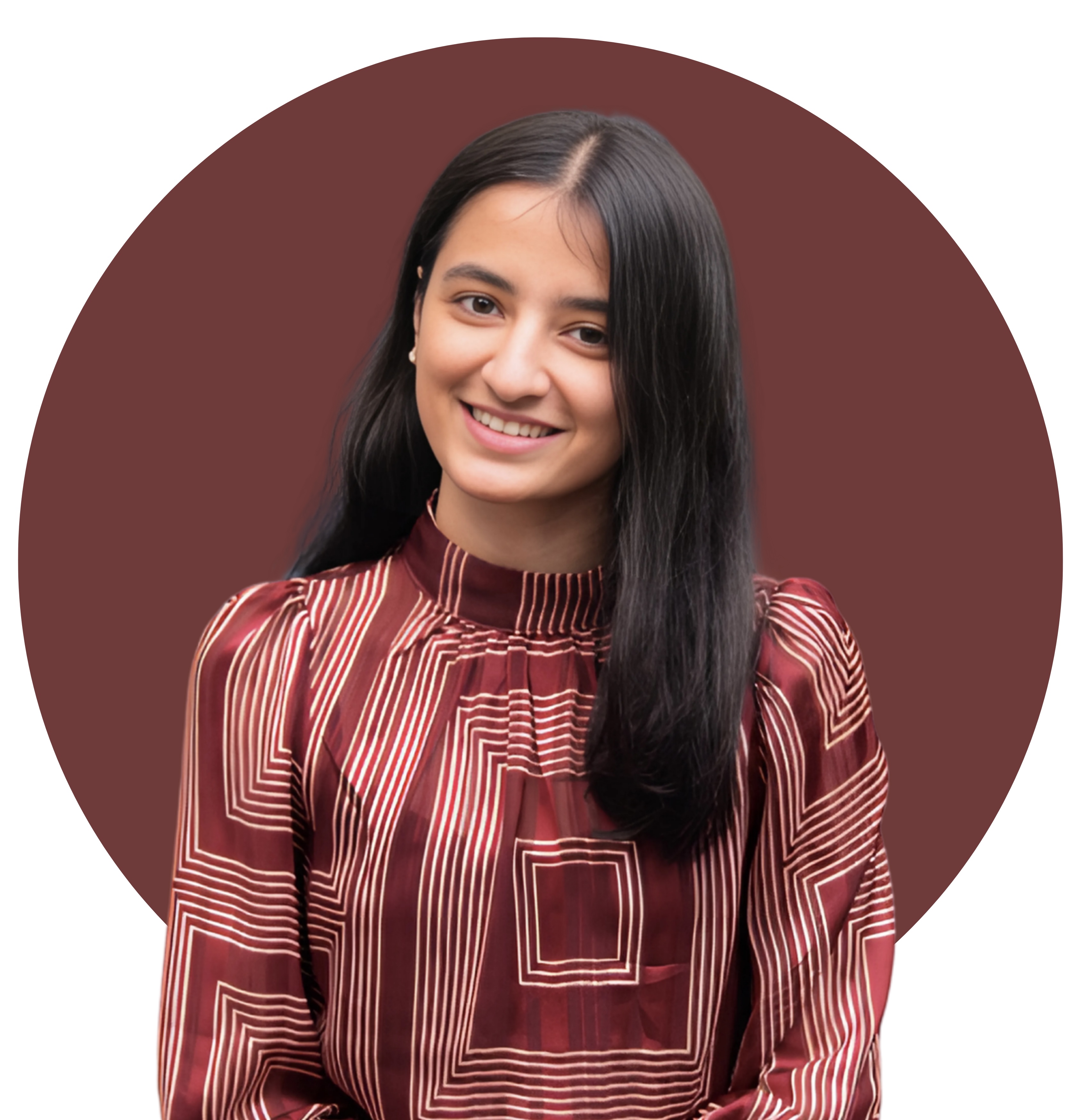
World Bank × CA Palak Rathi
900K+ Community Reach
Why This Series
The stories repeat. Across regions. Across income groups.
Women across South Asia face systemic barriers in education, healthcare, finance, and employment. These are not isolated stories — they are patterns backed by data. This series bridges the gap between policy research and lived reality, making the conversation accessible for the generation that will drive change.
Increase in women's labor supply after preschool access 9
64.4%
India's gender parity score (below 68.8% global avg) 10
The Mini-Series
4 Films. 1 Cohesive Story.
From emotion to data to ground reality to expert insight — each episode builds on the last, creating a narrative arc that moves from awareness to understanding to action.
Note: This is a directional proposal and can be refined based on discussion, the selected knowledge product, support project, and specialist conversation.
Episode 01
The Teaser
Emotional Hook · 30 seconds
Double-click for full script & shot breakdown
A minimal, voice-led film that opens with real women's lived barriers across India. The creator listens in silence as their voices take centre stage — stories of childcare drop-offs, inaccessible schools, denied bank accounts, missing healthcare, and stolen wages.
The film ends with a single reflective line: “Does this… sound familiar?” — setting the emotional and structural context for the entire series.
🎬
Visual: White studio, static close-up. Creator centered. Direct eye contact throughout. Cinematic silence.
🎧
Audio: 5 real voice-overs from women across India. Low-frequency ambient hum fades in at the close.
🎯
Goal: Stop the scroll. Create an emotional entry point into #ClearHerPath.
Storyboard — Visual Sequence
0:00
Wide
White Studio. Dead Silence.
Single figure. Centered. White cyclorama. Soft key light. No music. No ambient. Just presence.
0:03
Close-Up
5 Voices. 5 Barriers.
Camera slowly tightens over 19 seconds. Real voice-overs. Creator listens. Composure held.
0:19
Extreme CU
Just Eyes. Low-Frequency Hum.
Camera has crept to extreme close-up. All five voices have landed. Ambient hum fades in. Weight of silence.
0:25
End Card
“Does this... sound familiar?”
Creator breaks silence. One line to camera. Hard cut to black. Hashtag. Series announcement.
Episode 02
The Knowledge Film
Data-Led · 60–90 seconds
Opening: We begin with a direct callback: “After the last video, I wanted to understand something.” Then we move into the report: “If these stories are so common… is there a pattern?”
Core Idea: This video is about zooming out. We take the selected gender knowledge product and pull out one recurring insight. Not the whole report. Just one pattern that explains why these stories repeat. For example: drop-offs at life transitions, care infrastructure gaps, financial access barriers, or health access constraints. The idea is to show that these experiences are not isolated — they show up in data too.
Narrative Direction: Instead of slogans, the tone is analytical and calm: “When you look at the data, you start seeing the same pressure points.”“The stories repeat. Across regions. Across income groups.”
Closing Transition: We end by moving from research to reality: “So what does changing that pattern actually look like? In the next episode, we travel to one state in India to see what happens when that barrier is addressed.”
Anchored To: One selected World Bank gender knowledge product. One recurring insight pulled from the report — not the full document.
🎯
Goal: Make policy data feel personal. Show that the stories from Ep 1 aren’t isolated — they’re systemic patterns visible in research.
Storyboard — Visual Sequence
0:00
Close-Up
Hands on the Report
Macro shot. Picking up World Bank report from desk. Warm light.
0:05
Mid Shot
Reading the Report
"If these stories are so common... is there a pattern?"
0:22
Data Overlay
Data Comes Alive
On-screen data callouts appear. Charts from WB report visualised.
0:50
Close-Up
Patterns Can Be Changed
Report closed. Direct to camera. Transition to Gujarat.
Episode 03
The Beneficiary Story
On-Ground · Gujarat · 60–90 seconds
Opening: We begin directly on location. The beneficiary starts in her own words — what was difficult, what almost made her stop, what the real barrier looked like in her life.
Core Idea: This film will be organic and unscripted. It will not be a sit-down interview. Instead, we follow the beneficiary through her day — at her workplace, home, school, health centre, or wherever the intervention shows up in her life.
Closing Transition: We move to the bigger picture: “In the next episode, we speak with a World Bank specialist to understand how these kinds of interventions are designed — and what it takes to make them work at scale.”
🎬
Visual: Handheld follow-shot. Natural light only. No artificial setups. Documentary-grade on-ground footage across Gujarat.
🎤
Format:People & Policies — Palak’s on-ground IP. Organic, unscripted. Following the beneficiary through her day.
🎯
Goal: Show one real life changed by one intervention. Move from data (Ep 2) to lived experience on the ground.
Storyboard — Visual Sequence
0:00
Establishing
Gujarat at Dawn
Wide landscape. Natural light. Location sound only — birds, wind.
0:06
Follow Shot
Following the Beneficiary
Handheld follow-shot. Walking to workplace. Organic camera movement.
0:15
Two-Shot
Organic Conversation
Palak and beneficiary in natural setting. Unscripted. Real words.
1:05
Wide Pull-Back
Transition to Scale
Wide landscape pull-back. One story, one life. Closing question.
Episode 04
The Specialist Conversation
Expert Q&A · 10 min (Long-form) + 60–90s Reel Cut
A focused 10-minute conversation with a World Bank gender specialist, structured around the specific barrier and knowledge product anchoring the series.
Questions are pre-decided, covering: the core problem, what the data shows, how interventions are designed, challenges in implementation, and what makes something scalable.
Interactive element: Before filming, an Instagram story poll asks the audience: “What would you like to know about this issue?” Selected questions are woven into the conversation with explicit mention.
🎙️
Format: Clean setup. Natural conversation. Simple and undramatic. Full 10-min on YouTube; 60–90s snippet for Instagram.
🙋
Audience Integration: Community-sourced questions included in conversation, credited publicly.
🏁
Closing: “Clearing her path isn't about one intervention. It's about how you move from one story… to many.”
Storyboard — Visual Sequence
0:00
Two-Shot
Clean Interview Setup
Two-shot. Palak and WB specialist. Minimal backdrop. Lav mics.
2:00
Close-Up
Data Deep-Dive
Specialist shares key insights. On-screen data overlays appear.
7:30
Close-Up
Audience Questions
Community-sourced questions from Instagram Stories woven in live.
9:30
Series Close
This Was #ClearHerPath
Direct to camera. Series closing line. Hard cut to end card.
Creative Approach
Not a Campaign. A Conversation.
Every creative choice is designed to make complex policy feel personal, urgent, and shareable.
👁️
Emotion First
Lead with real voices and real stories. Data supports the narrative — it never replaces it. The teaser stops the scroll with silence, not noise.
📈
Data-Grounded
Every claim is anchored to World Bank research. The knowledge film turns reports into visual stories, making policy accessible for youth audiences.
🌎
On-Ground Truth
No stock footage. No re-enactments. We travel to Gujarat and film with real beneficiaries, following the People & Policies documentary format.
🙋
Community-Led
Audience questions sourced via Instagram Stories are woven directly into the specialist interview, turning viewers into participants.
🎬
Cinematic Quality
Minimal, intentional visual language. White studio. Close-ups. Documentary-grade on-ground footage. Every frame is designed with purpose.
🔗
Cohesive Arc
Each episode ends with a transition into the next, building a narrative that moves from awareness to understanding to action.
Multi-Platform Distribution
Made for Scroll. Built for Impact.
📷
Instagram
Reels: 60–90s per episode Stories: Audience Q&A polls & BTS Primary distribution
▶️
YouTube
Full 10-min specialist interview Series playlist
💼
LinkedIn
All episodes cross-posted Policy & professional audience reach
🌐
World Bank
Full assets for WB channels Knowledge product linking
Investment
Campaign Investment
Total Campaign Investment
$33,000
4 Content Pieces — Concept to Delivery
What’s Included
End-to-end campaign delivery — from first concept to final publish.
* Does not include travel and stay costs for the creator and crew wherever required (e.g. Gujarat on-ground shoot).
The Creator
CA Palak Rathi
Chartered Accountant · Digital Creator · Policy Communicator
Palak explains public policies that affect your rights, your money, and your life. Starting from finance content grounded in her CA background, she discovered that most citizens — even educated ones — barely know 5% of the schemes and initiatives that already exist across India's 54+ central ministries.
Today, across a 900K+ community, her content spans international trade agreements, collateral-free loan schemes, mental health helplines, bills in Parliament, and more. She has worked directly with multiple Government Ministries and was recognized among the Top 10 Creators for Social Change at the National Creators Award.
Execution Timeline
Women’s Day Launch. March 2026.
Note: Pre-production timelines are dependent on the World Bank team for knowledge product selection, specialist availability, beneficiary & location identification, and content approvals. We recommend initiating these discussions early so all shoots are completed before March 8.